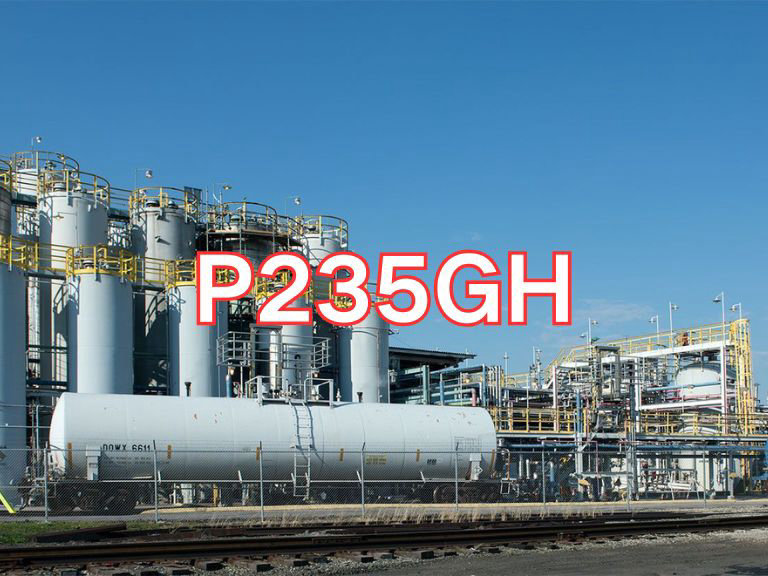


12Cr1Mo1VR is a medium-carbon chromium-molybdenum-vanadium alloy heat-resistant steel belonging to the low-alloy bainitic steel family. It is specifically designed for welded pressure vessels operating under high-temperature, high-pressure, and complex stress conditions over extended service periods, offering excellent elevated-temperature strength, creep resistance, microstructural stability, and good weldability.?
The grade designation has a clear technical meaning:?
- "12" indicates an average carbon content of approximately 0.12% (by weight), providing sufficient strength while maintaining good ductility and weldabilit
- "Cr1" refers to a chromium content of 0.90%–1.20%, which significantly enhances oxidation resistance, corrosion resistance, and high-temperature microstructural stability
- "Mo1" denotes a molybdenum content of 0.45%–0.65%, higher than in standard Mo-containing steels, greatly improving the material’s long-term creep strength and resistance to temper embrittlemen
- "V" stands for vanadium, typically added in the range of 0.02%–0.08%, which acts as a strong carbonitride-forming element to refine grain structure and provide precipitation strengthening, further enhancing thermal strength and resistance to softening
- "R" is the first letter of the Chinese pinyin "Rong" (meaning "vessel"), indicating its use in pressure equipment.
Therefore, 12Cr1Mo1VR refers to a high-strength, specialized heat-resistant steel plate for pressure vessels with ~0.12% carbon, ~1% chromium, ~0.55% molybdenum, and added vanadium.
This steel plate is primarily used in critical pressure-bearing components operating under extreme high-temperature and high-pressure conditions. It is widely applied in power generation industries for headers, steam drums, and main steam piping in supercritical and ultra-supercritical boilers, as well as in petrochemical and coal chemical plants for high-temperature reactors, hydroprocessing units, and heat exchangers. Its typical service temperature can exceed 580°C, making it especially suitable for components subjected to prolonged exposure to high temperature, high pressure, and cyclic loading. It serves as one of the core structural materials in modern advanced energy systems. Key features of 12Cr1Mo1VR include: yield strength ≥325 MPa, tensile strength 500–640 MPa, and superior overall mechanical properties; outstanding creep resistance, stress relaxation resistance, and microstructural stability at elevated temperatures; enhanced thermal strength and resistance to temper softening due to the synergistic effect of Cr, Mo, and V; and a uniform bainitic microstructure achieved through normalizing and tempering, providing good impact toughness (average impact energy ≥47J at -20°C) and weldability. Post-weld heat treatment effectively restores joint properties.
Currently, 12Cr1Mo1VR is manufactured and inspected in accordance with the Chinese national standard GB/T 713-2014 Steel Plates for Boilers and Pressure Vessels. Since its implementation in 2014, this standard has established strict requirements for all technical parameters and has become a core standard widely adopted in China’s boiler and pressure vessel industry. As an upgraded high-performance heat-resistant steel, 12Cr1Mo1VR is increasingly being used in major energy projects.

Ultrasonic Testing (UT)
A key non-destructive testing technique that uses high-frequency sound waves to detect internal flaws in steel plates. The probe emits sound waves, which reflect when encountering defects such as cracks or inclusions. The receiver captures the echoes, enabling precise determination of defect location and size. With high sensitivity, strong penetration, and fast inspection speed, UT effectively ensures internal quality, widely used in the production of heavy plates, pressure vessel plates, and other high-end products to guarantee safety and reliability.

Magnetic Particle Testing (MT)
A common surface inspection method that magnetizes the workpiece, causing leakage magnetic fields at surface or near-surface defects like cracks or inclusions, which attract magnetic particles to form visible indications. Simple to operate and highly sensitive, MT is suitable for rapid inspection of surface and near-surface flaws in ferromagnetic materials, widely used for online or offline inspection of plate edges, ends, and welds, ensuring product quality and safety.

Penetrant Testing (PT)
A non-destructive method for detecting surface-breaking flaws. A penetrant liquid is applied to the cleaned steel surface, allowing it to seep into defects such as cracks or pores. After removing excess penetrant, a developer is applied, causing the trapped penetrant to bleed out and form visible indications. Simple and cost-effective, PT is suitable for inspecting surface defects in various non-porous materials, commonly used for welds, castings, and complex components, effectively ensuring surface quality of steel plates.